Otherwise, please select your country so we can show you products & currency for your location
The content of our website is always available in English and partly in other languages. Choose your preferred language and we will show you the content in that language, if available.
When choosing a high performance liquid chromatography (HPLC) system, it's important to consider how your future needs may evolve from your current needs. In this article, you’ll learn about the advantages of modular HPLC systems when it comes to current experimental needs and how the ability to swap out HPLC components safeguards the future of your system and your research.
Preparative high performance liquid chromatography (HPLC) is a well-established method for purifying target compounds. Method development is usually done at a smaller scale to define sufficient resolution between the peaks without wasting large amounts of sample. It is common to scale-up the purification from a smaller column to a larger preparative one - learn more in this technical note.
Liquid chromatography (LC) is the standard method used for purifying products in the discovery stages, as it is cost-effective, relatively simple to perform, and reliable. However, obtaining high purity and yield using this approach often comes at the cost of throughput, as purification runs must be lengthened to achieve greater separation between components. This article explores how users can enhance fraction collection efficiency and streamline the purification process by using the latest advances.
The Institute for Research and Innovation in Biomedicine (IRIB) focuses on developing innovative technologies for diagnosing, treating, and preventing diseases. In this case study, we explore how the researchers at IRIB are using preparative HPLC in their peptide purification drug discovery applications.
Preparative LC coupled with mass spectrometry (MS) is a well-established method for purifying target compounds. In this tech note, we demonstrate the use of a VERITY 271 LCMS system to perform mass-based purification of target peptides from a mixture. The system is controlled using TRILUTION® LC Software, which provides real-time and post-run MS and UV data.
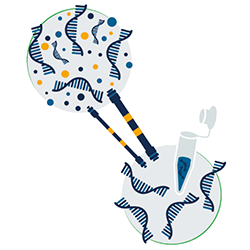
Custom manufactured oligonucleotides require additional purification steps after synthesis to separate the full-length product from failing sequences and small impurities. In this infographic, we highlight how to accelerate purification for enhanced productivity and scalability with automation.
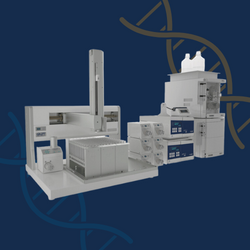
Oligonucleotides, or oligos, are at the core of some of the most life-changing molecular biology tools used today. From qPCR to antisense gene therapy, oligos have changed what scientists can achieve through synthetic and molecular biology. While synthesis methods continue to advance, one significant challenge remains: oligo purification. Here, we explore the most common approaches to oligo purification, and explain how the right HPLC system can overcome any current and future challenges and help you achieve more accurate results.
Researchers are rushing to identify, target, and analyze peptide functions for drug development. Here is what you should know about peptide purification.
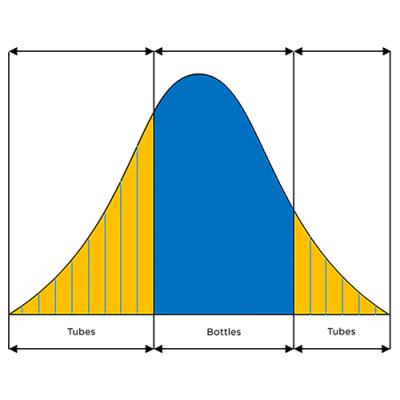
In this technical note, we highlight how our software and products help you add extra dimensions to your fraction collection possibilities allowing you to set conditions according to specific requirements for synthetic compound purification.
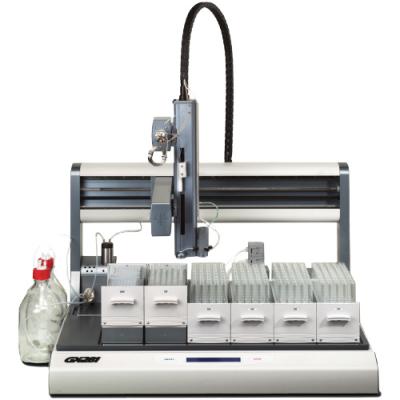
This technical note shows how the use of a suitable Gilson liquid handler and TRILUTION® LH Software makes it is possible to automate post-purification analysis sample prep. Automating this process reduces manual handling errors
and provides traceability where previously there was none.